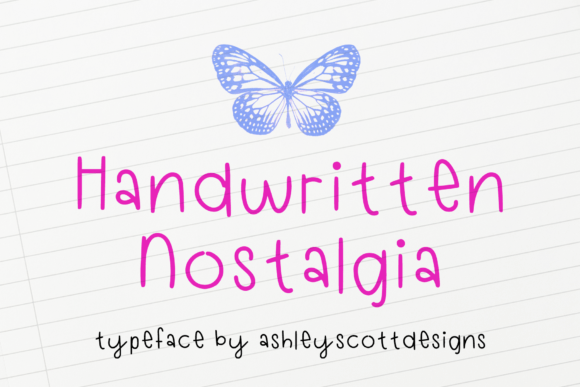
Handwritten Nostalgia: A Font That Feels Like a Memory
There’s a specific kind of warmth that comes from finding an old school notebook, a forgotten diary, or a margin filled with doodles. It’s a tangible connection to a time of passed notes, big dreams, and the simple, analog joy of putting pen to paper. Capturing that feeling in a digital world is no small feat, but that’s precisely the magic of the Handwritten Nostalgia font. It’s not just a typeface; it’s a time machine for your designs, offering a direct line back to the whimsical charm of the 90s and early 2000s.
As a premium font, Handwritten Nostalgia is designed for creatives who want to inject personality and authenticity into their work. It’s a handwritten font that avoids the pitfalls of looking too perfect or digitally sterile. Instead, it embraces the beautiful imperfections of real handwriting—the slight variations in letterforms, the casual flow, the feeling that it was written quickly and with genuine emotion. This isn't a rigid script font; it's more akin to the natural scrawl you’d find in a personal journal, making it incredibly approachable and relatable.
Where This Retro Handwriting Truly Shines
The true value of a creative font like this is in its application. It’s a versatile tool, but it excels in projects where personality and connection are paramount. Think beyond just making something look "old." Consider how this font can make your audience feel.
- Brand Identity & Logo Design: For brands targeting a millennial or Gen-X audience, this font can be a cornerstone of a nostalgic brand identity. It’s perfect for a boutique bakery, a handmade craft shop, a lifestyle blog, or an indie coffee roaster. Using it in a logo or for key headings instantly communicates a handcrafted, personal touch that builds immediate rapport.
- Packaging & Editorial Design: Imagine this font on a coffee bag, a candle label, or a book cover. It adds a layer of storytelling before the customer even reads a word. In editorial design, it’s fantastic for pull quotes, chapter titles, or section headings in a magazine or zine, breaking up the monotony of standard body text and adding visual interest.
- Digital & Social Media: In the fast-paced world of social media, authenticity grabs attention. Use Handwritten Nostalgia for Instagram story text, quote graphics, or video thumbnails to create a more intimate, conversational feel. It makes your digital presence feel less corporate and more human, which is a powerful tool for engagement.
- Personal Projects & Crafting: For hobbyists and crafters, this font is a dream. It’s ideal for creating custom stationery, party invitations, scrapbook titles, or heartfelt greeting cards. It brings the soul of a handwritten note into a polished, digital format you can print and share.
Making It Work: Practical Font Pairing and Usage
A great display font needs a solid partner. Because Handwritten Nostalgia has such a strong personality, pairing it correctly is key to maintaining a professional and readable design. The goal is contrast and balance.
For body copy, pair it with a clean, neutral sans serif font or a classic, highly-readable serif font. A sans serif like Lato, Montserrat, or Open Sans provides a modern, clean counterpoint that lets the handwritten headlines pop. Alternatively, a traditional serif like Garamond or Georgia can create a lovely, almost bookish feel that complements the nostalgic vibe. Avoid pairing it with another ornate or overly stylized font, as they will compete for attention and create visual chaos.
A Note on Hierarchy and Readability
Think of Handwritten Nostalgia as the star of the show, not the entire cast. It’s built for headlines, titles, short phrases, and call-outs. Its charming, casual nature makes it less suitable for long blocks of body text, where readability over extended reading is crucial. Use it strategically to establish a visual hierarchy: a bold, nostalgic headline draws the eye, and the clean body text delivers the information clearly. This approach ensures your design is both beautiful and functional.
Choosing and Evaluating Your Font
When you decide to bring a commercial font like this into your toolkit, you’re investing in a design asset. It’s worth taking a moment to evaluate the package. Look at the full character set. Does it include the punctuation and symbols you need? Are there multiple weights or styles, like a bold or italic version, to offer more flexibility?
Before committing, test it within the context of your project. Drop it into a mockup of your website, your packaging, or your social media template. See how it feels. Does the personality of the font align with the message you want to send? Does it resonate with your target audience? This hands-on testing is the best way to know if a font is the right fit.
Finally, always be clear on the licensing. A reputable premium font will come with a clear commercial license, allowing you to use it confidently across your client work, products, and marketing materials without legal worry. It’s the professional way to build a reliable and ethical design practice.
In a world saturated with sleek, minimalist modern typography, Handwritten Nostalgia offers a refreshing and emotionally resonant alternative. It’s a tool for designers, entrepreneurs, and creators who understand that the most powerful designs are the ones that make people feel something. It’s more than just letters on a page—it’s a feeling, a memory, and a connection waiting to be made.