King Castle: A Celtic-Inspired Display Font for Bold Branding
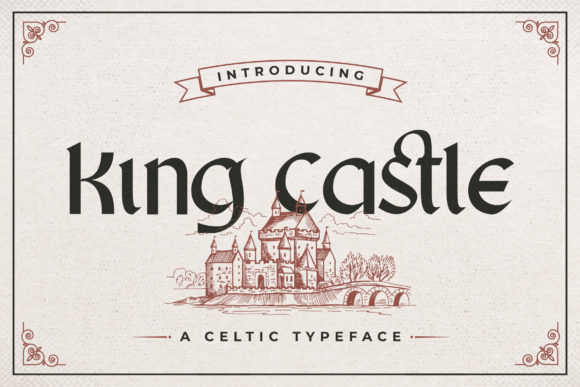
Finding a typeface that feels both timeless and genuinely distinctive is a challenge. Many fonts fall into predictable categories, leaving designs feeling generic. King Castle offers a compelling alternative. This premium font draws inspiration from Celtic artistry, resulting in a display typeface with an elegant, structured, and undeniably cool personality. It’s a creative font designed for moments that demand attention without shouting.
Understanding the King Castle Aesthetic
King Castle is not a casual, whimsical script. Its character is defined by clean, geometric lines, subtle angular terminals, and a balanced weight that suggests both strength and refinement. Think of it as a serif font cousin with a historical wink. The letterforms avoid ornate flourishes, instead using precise angles and consistent strokes to create a unified, modern typography look with ancient roots. This makes it incredibly versatile—it carries the weight of tradition but feels fresh and applicable to contemporary design assets.
The font’s personality is confident, intelligent, and slightly mysterious. It doesn’t mimic historical manuscripts verbatim; rather, it interprets Celtic aesthetics through a minimalist lens. This approach ensures it integrates smoothly into modern brand identity systems, avoiding the risk of looking like a costume or a theme. For designers, this means you get the unique flair of an inspired typeface without the limitations of a pure historical revival.
Where King Castle Shines: Practical Applications
As a display font, King Castle is built for headlines, logos, and short, impactful text blocks. Its strength lies in setting a tone. For logo design, it provides instant character, making it ideal for brands in craft brewing, artisanal goods, boutique hotels, fantasy gaming, or any niche where heritage and quality are key selling points. The font’s clarity ensures it remains legible at various sizes, a critical factor for packaging design where shelf impact and quick recognition are paramount.
In editorial design, King Castle can elevate magazine covers, chapter headings in books, or feature titles in reports. It pairs exceptionally well with a clean sans serif font or a simple script font for body copy, creating a dynamic visual hierarchy. For web design, it’s perfect for hero section headlines, promotional banners, or accent text that needs to stand out in a digital landscape crowded with standard web fonts. Similarly, in social media graphics, it can make quotes, announcements, or campaign headlines pop, increasing engagement through visual distinction.
Strategic Pairing and Project Fit
Choosing King Castle is a strategic decision. It’s not a workhorse for body text; its role is to make a statement. Evaluate your project’s goals first. Is the brand voice traditional yet modern? Is the project aimed at an audience that appreciates craftsmanship and story? If yes, King Castle is a strong candidate. Test it early in your design process.
A successful font pairing is essential. Balance its structured presence with simplicity. A versatile sans serif font like a geometric or humanist sans provides a clean, readable counterpoint for paragraphs. Alternatively, a soft handwritten font can add a personal, approachable touch to secondary elements, creating a compelling contrast between the formal and the intimate. Always test pairings in context—view them on mockups of business cards, websites, or product labels to assess real-world harmony.
Licensing, Readability, and Professional Use
King Castle is a commercial font, and understanding its license is crucial for professional work. Licenses typically cover desktop use (for logos, print), web use (via @font-face), and app embedding. Ensure the license you acquire matches your project’s scope—whether it’s for a single client, multiple projects, or a product you intend to sell. This protects both you and the font creator.
Regarding readability, use King Castle as intended. At small sizes or in long paragraphs, its distinctive forms can become challenging to read. Reserve it for short, high-impact text. Always check kerning (the spacing between specific letter pairs) in your design software. While well-crafted, display fonts often benefit from manual kerning adjustments in logos or headlines to achieve perfect optical balance. This small step significantly enhances professionalism.
Elevating Your Design Toolkit
Integrating a font like King Castle into your library is an investment in versatility. It’s a design asset that can solve specific creative problems—when a project needs to feel rooted, authoritative, or uniquely styled. For entrepreneurs and small business owners, using such a distinctive typeface can help establish a memorable brand identity from the outset, setting you apart in crowded markets.
For content creators and bloggers, it offers a way to visually brand your work, creating a consistent and recognizable style across your website, PDFs, and social media. The key is thoughtful application. Use it to accent, not overwhelm. Let its cool, original character enhance your message without distracting from it. By focusing on its strengths—headline impact, logo creation, and thematic branding—you can leverage King Castle to produce work that feels both professional and authentically crafted.