Medical: A Sketched Font for Authentic Creative Projects
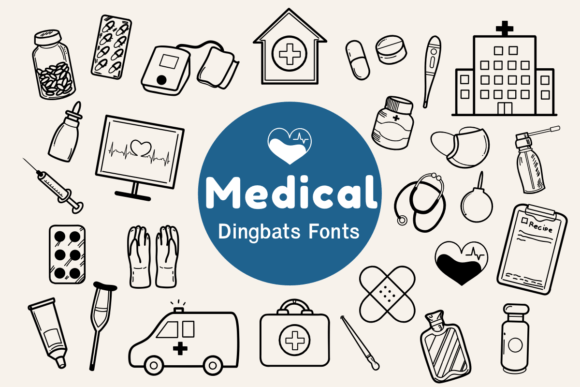
In a digital world saturated with polished, flawless vectors, there is a growing hunger for authenticity. We see it in the resurgence of hand-lettering, the popularity of textured backgrounds, and the demand for designs that feel personal rather than mass-produced. This is precisely the space the Medical typeface occupies. Far from its clinical name, this dingbats font brings a raw, sketched aesthetic to the table, offering a distinct personality for projects that need to feel human, approachable, and creatively charged. It’s not about perfection; it’s about character.
The Visual Character of a Sketched Typeface
At its core, Medical is a display font defined by its hand-drawn, sketched lines. Imagine the confident, slightly irregular strokes of a pen on paper. The edges aren't perfectly smooth, and the weight of the lines might vary subtly, mimicking the natural pressure of a human hand. This imperfection is its greatest strength. Unlike a sterile sans serif font or a formal serif font, Medical conveys warmth, creativity, and a DIY spirit. Its personality is informal, artistic, and inviting, making it an excellent choice for projects where you want to bypass corporate stiffness and connect on a more personal level.
Where Medical Truly Shines: Practical Applications
Understanding a font's ideal context is key to using it effectively. Medical excels in scenarios where a touch of handcrafted charm can elevate the message. Think beyond traditional text blocks and consider it a creative font for impact.
Creative & Personal Projects
This is Medical's natural habitat. It’s perfect for adding personality to invitations for a rustic wedding or a casual birthday party. DIY crafters will find it invaluable for creating custom labels, stencils, or quotes for home decorations. Use it on scrapbook pages, custom planner stickers, or as a standout element on a handmade greeting card. The font’s sketched theme makes any project feel more intentional and artful.
Branding & Marketing for a Human Touch
For entrepreneurs and small business owners, especially those in artisanal, creative, or wellness fields, Medical can be a secret weapon. It works beautifully for logo design for a local coffee shop, a boutique bakery, or a yoga studio. It adds instant character to packaging design for handmade soaps or gourmet snacks. In marketing, use it for headline text on a website, call-to-action buttons, or social media graphics to create posts that feel more like a conversation than an advertisement. It’s a premium font choice for brands that want to appear approachable and genuine.
Publishing & Editorial Design
Publishers and bloggers can leverage Medical for specific, high-impact roles. It’s an excellent choice for chapter titles in a lifestyle cookbook, pull quotes in a magazine feature, or the title of a blog post that needs to stand out in a feed. When used sparingly, it can break the monotony of long-form text set in a traditional body font, creating visual interest and guiding the reader’s eye. Think of it as a design asset for emphasis, not for readability in large blocks.
Integrating Medical into Your Design Workflow
Adopting a new typeface like Medical requires a bit of strategy to ensure it enhances rather than hinders your work. Here’s how to approach it practically.
Evaluating Fit and Font Pairing
First, ask if the sketched, informal style aligns with your project’s tone. Medical wouldn’t suit a legal contract or a formal corporate report, but it’s perfect for a children’s book cover or a café menu. The next critical step is font pairing. Because Medical is a strong display font, it needs a partner that recedes gracefully. Pair it with a clean, simple sans serif font like Lato or Open Sans for body text. This creates a clear visual hierarchy, where Medical commands attention in headlines and the sans serif ensures readability for paragraphs. Avoid pairing it with another highly decorative or script font, as this will create visual chaos.
Readability and Hierarchy Considerations
While fantastic for headings, use Medical judiciously. Its detailed, sketched nature can make it difficult to read in small sizes or for lengthy sentences. Always test it at the intended size. For web design, ensure it renders clearly across different devices. Use it for short, impactful phrases where its personality can be fully appreciated. This thoughtful application strengthens your brand identity by consistently using the font in the right contexts, building recognition without sacrificing clarity.
Checking Styles and Commercial Licensing
Before committing, explore what the font family includes. Does it come with alternate characters, ligatures, or multiple weights? These extras can provide valuable flexibility. Equally important is understanding the licensing. If you’re using Medical for a client project, merchandise, or a product for sale, you need a commercial font license. Always verify the license terms to ensure your use is compliant, whether for digital or print applications. Treating your design assets with this professionalism protects you and your clients.
Final Thoughts on Choosing Your Creative Toolkit
Choosing a font is a design decision that influences mood, perception, and engagement. The Medical typeface offers a specific and powerful tool: the ability to inject authentic, hand-drawn warmth into a project. It’s a reminder that in modern typography, sometimes the most effective designs are those that embrace a little imperfection. By understanding its strengths and applying it with intention, you can use Medical to create work that feels more personal, memorable, and genuinely connected to your audience. It’s not just a font; it’s a stylistic choice that says you value creativity and human touch.